
Termites are recognised as a global concern for structural damage, and repair costs are typically not covered by standard building insurance.
Baiting is one of the most established methods of termite control, and here is how it actually works.
How Termite Baiting Works
Baiting centres on placing stations to intercept foraging termites and target the colony behind them, using either in-ground or above-ground stations. Because termites are social insects that share food throughout the colony, a bait carried back by even a small number of foraging workers can eventually reach the queen and the rest of the population, which is what makes this method effective against the colony as a whole rather than only the individuals that happen to find a station.
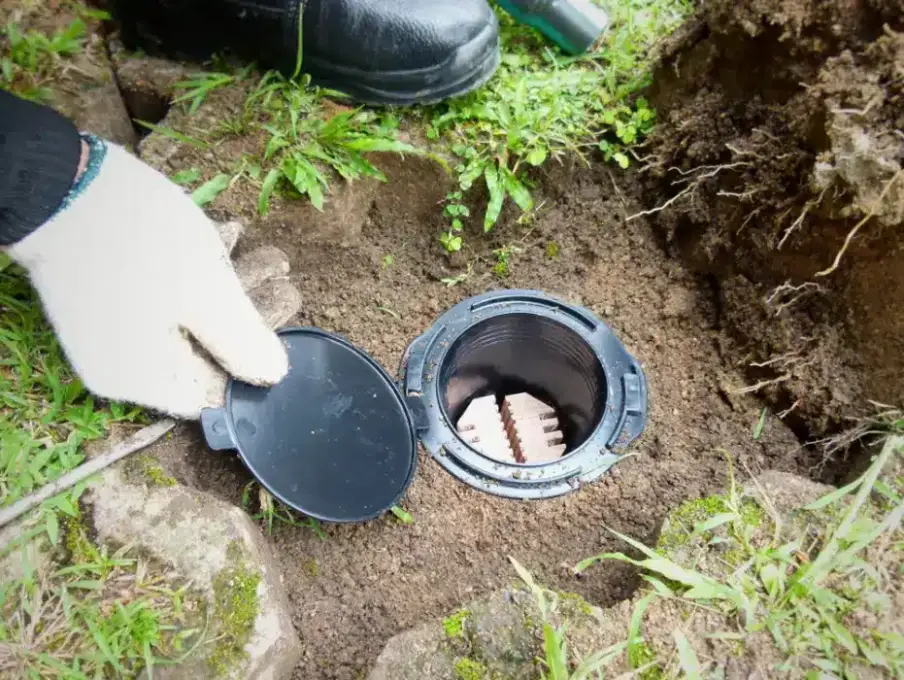
In-ground bait stations are installed below the soil surface to intercept termites travelling underground. They contain a slow-acting insecticide the termites carry back to the colony, leading to gradual colony-wide decline.
Above-ground bait stations are placed near confirmed activity, such as damaged timber, to target termites already foraging in that specific area.
Non-Toxic vs Toxic Baits
Non-toxic baits (typically cardboard, paper or wooden stakes rich in cellulose) function as monitoring tools. When termites feed on them, it confirms activity in the area, letting the problem be identified before it escalates. Toxic baits contain a slow-acting insecticide instead, deployed once activity is confirmed. Termites carry it back and share it with the colony, causing a gradual population decline that targets the colony as a whole rather than only the termites visible at the station. Many properties start with non-toxic monitoring stations and only move to toxic bait once activity is actually confirmed, rather than treating every station as toxic from day one.
Benefits of Termite Baits
- Low chemical use, with the active ingredient present in smaller amounts than many household products, and no odour to disturb the property
- Targeted application only where activity is detected, rather than a full-perimeter treatment
- Early detection through monitoring stations, catching activity before it becomes a full infestation
- Simpler installation than a full liquid soil treatment, since stations are placed around the perimeter without extensive digging or drilling
None of this makes baiting universally better than a barrier. It is a genuine option with its own trade-offs, most notably a slower result than a contact treatment, which is why the right choice depends on the property and the situation, not on which method sounds most appealing on paper.
When a Baiting System Suits Your Property
Baiting is often the better fit where a liquid barrier is hard to apply evenly, such as sites on piers, split levels, or clay and high-gravel soil (see our guide to which treatment suits your property for the full site-condition comparison). For a physical or chemical barrier instead, see our termite barriers Adelaide page, or for an ongoing reticulation system, see our termite reticulation systems page.
Book an Inspection
Our team checks for signs of activity and can install bait stations as part of a treatment plan matched to your property. Contact Tom’s Pest Control Adelaide, call (08) 8876 5311, or visit our termite inspection and treatment page.
FAQs
How long does a baiting system take to work?
Baiting is slower than a contact treatment, since it relies on termites finding the station and carrying the bait back to the colony. Results build over weeks rather than days.
Do bait stations need ongoing maintenance?
Yes. Stations are checked periodically for activity and refilled as needed, similar to the monitoring schedule for a chemical barrier.